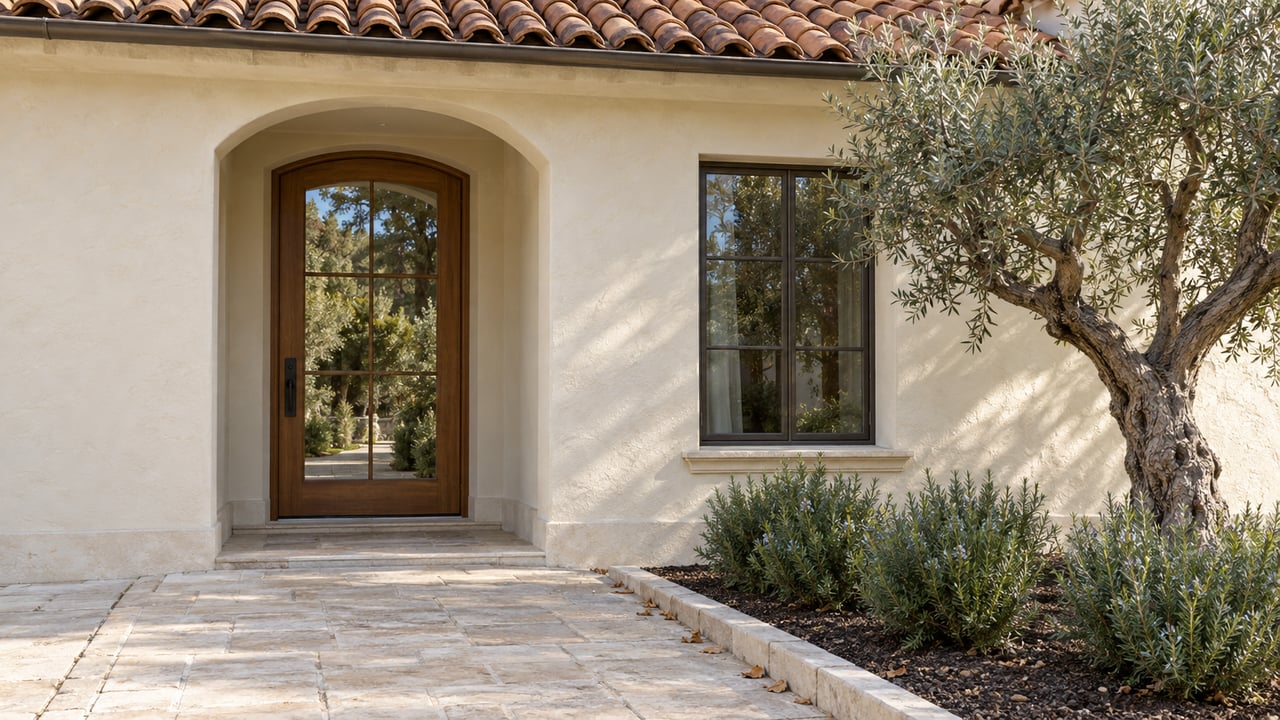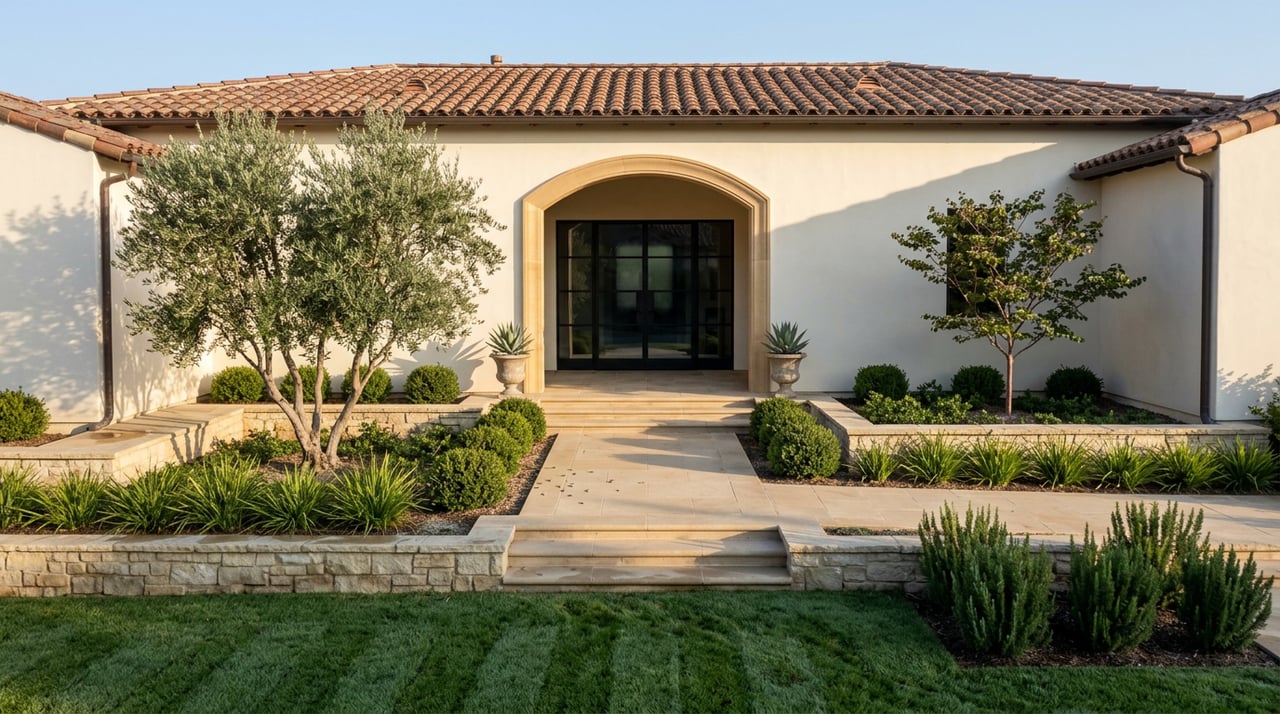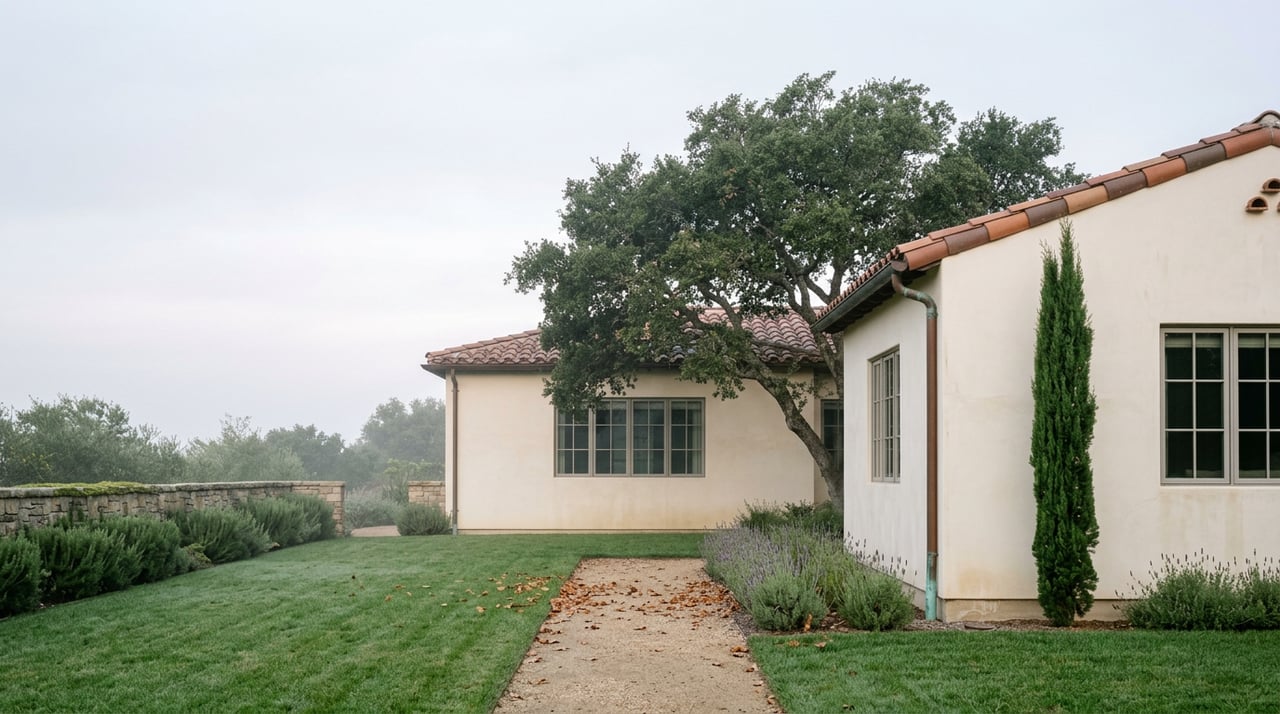
Drive the loop through Westside Alamo, past Stonegate's gates or the oak-studded acreage off Lark Lane, and you're looking at a version of the East Bay that predates the sewer main. Half-acre and full-acre lots. Mature oaks. Room for a vineyard row or a pool house. What you can't see from the street is what's underneath a meaningful share of those lots: a septic tank, a leach field, sometimes a private well feeding the landscaping. It's part of what makes these properties feel spacious and private. It's also the single most common surprise that shows up mid-escrow, not because anything is wrong, but because nobody priced the decision before the buyer's inspector did.
Here's the piece most sellers miss: the fix for an aging or marginal septic system in Alamo isn't only "repair it" or "replace it." There's a third option, financed by the same public agency that treats the wastewater for most of the neighborhood, that changes the math on when to act.
An Adobe Clay Problem That Never Fully Left
The reason septic still matters so much in this stretch of Contra Costa County traces back to 1946. Before that year, most of central Contra Costa relied on individual septic systems, and the area's heavy adobe clay soil didn't drain them well. Systems overflowed. State health officials at the time considered the resulting conditions among the worst in California, with typhoid a real threat. Voters approved a sanitary district that June, and within 26 months Central Contra Costa Sanitary District, known locally as Central San, had a main trunk line and treatment plant running.
That history matters today because it explains why Central San still treats septic in its service area, which explicitly includes Alamo, Danville, Lafayette, Moraga, Orinda, Pleasant Hill, Walnut Creek, and parts of Martinez and San Ramon, as a problem to be solved rather than a permanent feature. The clay hasn't changed. Neither has the agency's posture toward getting properties off individual systems once a public sewer main is within reach.
What Actually Happens During a Septic Inspection Here
If you're selling a septic-served home in Alamo, the inspection isn't one event. It's usually two, and they measure different things.
| Inspection type | What it covers | Enough for a home sale? |
|---|---|---|
| Visual/basic | Walks the drainfield, checks for standing water, odor, or unusually green grass | Not on its own |
| Full transaction inspection | Pumps the tank, checks baffles and the effluent filter, runs a flow test under load, produces a written report | Yes, this is the standard buyers and lenders expect |
Contra Costa's own land use guidance recommends pumping every three to five years, or sooner if sludge builds up within 12 to 18 inches of the outlet. If a seller can't produce that history, it reads as a red flag to a buyer's agent even when the system is fine, because there's no way to prove otherwise on inspection day.
There's a separate rule that trips up buyers looking at properties with both a well and a septic system, which describes a fair number of Alamo's larger lots: county code requires a minimum 100-foot separation between a well and a septic tank or leach field. On a flat half-acre parcel that's rarely an issue. On some of the tighter or more irregularly shaped lots in older sections of town, it can constrain where a replacement leach field is even allowed to go, which is a fact worth knowing before a listing goes live, not after an offer falls through.
Unlike Santa Cruz County, which has required a septic inspection and pumping report at every point of sale since July 2023, Contra Costa doesn't have a matching countywide mandate. In practice this rarely changes the outcome. Most purchase contracts and most lenders ask for a current inspection anyway, so the absence of a county rule mostly means the timing is up to the seller rather than fixed by ordinance. That flexibility is worth using.
The Program Most Alamo Sellers Have Never Heard Of
Central San runs a Septic to Sewer program, S2S for short, aimed at exactly this situation. If your property sits adjacent to an existing sewer main, the district will finance the conversion, covering permitting, inspection, capacity fees, and the cost of properly abandoning the old septic tank, up to $65,000. You don't pay it at closing. It's repaid over 15 years through your property tax bill, the same way many municipal improvement assessments work.
Central San is direct about why this program exists. In its own guidance for property owners, the district frames septic in an urban or suburban setting as a temporary solution rather than a permanent one, and it says plainly that having a septic system tends to make a property less marketable at time of sale compared to a similar sewered property. Converting, by the same logic, can support a higher market value.
That's the part that changes how a seller should think about the timeline. This isn't a repair decision made under inspection-period pressure. It's a financing decision that can be made months before a home ever hits the market.
The Math That Changes When You Run It Before Listing
Run the numbers side by side and the appeal of converting early becomes clearer.
National septic guides put a failed or marginal system's drag on sale price somewhere between $10,000 and $25,000, since buyers and their agents price in not just the repair but the uncertainty of what else might be wrong. A full drain field replacement, separate from the S2S conversion, typically runs $15,000 to $30,000 according to the same guides. Add those together and a seller facing a septic system near the end of its useful life could be looking at a five-figure hit to net proceeds even after paying for repairs, simply because the buyer pool still discounts for the perceived risk.
Compare that to the S2S path: no cash due before closing, a fixed cost cap of $65,000, and a 15-year repayment schedule that transfers with the property tax bill rather than draining a seller's proceeds at the table. For a seller who was already going to need a drain field replacement or who's tired of budgeting for pump-outs every few years, converting to sewer before listing can be the more capital-efficient move, not because septic is inherently a problem, but because the marketability gap between septic and sewer is wider than most sellers assume until they're staring at an inspection report.
This isn't financial advice, and eligibility depends on whether a sewer main actually runs adjacent to your specific parcel. Central San and Contra Costa Environmental Health are the two agencies with the final word on both the technical feasibility and the paperwork.
If You're Weighing This Before You List This Fall
The sequence that tends to work best: request a septic inspection early, well before you're under contract, so you know exactly what condition the system is in and how much runway it has left. If it's aging or marginal and your lot is near an existing main, call Central San's permit counter and ask directly whether your address qualifies for S2S before you commit to a straight repair. If conversion isn't feasible, a documented recent pump-out and inspection report still does real work, since buyers and their agents consistently treat a system with clean paperwork differently than one with none.
Either way, the decision is easier to make on your own timeline than on an inspection contingency's clock.
A Few Questions Sellers Ask
Does every home in Alamo have septic? No. Many properties, particularly closer to town, are already on Central San's public sewer. Septic is more common on the larger, more rural-feeling lots in Westside Alamo and similar hillside and estate areas.
How current does a septic report need to be to satisfy a buyer? There's no single statewide clock, but most buyers and lenders expect an inspection from the current escrow window rather than one that's months or years old. A routine pumping receipt alone isn't the same as a full inspection report.
Can a seller start the S2S application after already being in escrow? Central San can tell you your eligibility at any point, but the smoother path is starting before you list, since the conversion work itself takes time to permit and schedule and buyers generally don't want to wait on it during a live transaction.
Septic isn't a defect. It's a system, and like any system on a property this size, it has a maintenance schedule and a decision point. Knowing which side of that decision point you're on before a buyer's inspector tells you is worth the phone call.
If you're weighing whether to repair, convert, or simply document what you have before listing an Alamo home, the Dana Weiler Team can walk through the specifics with you and connect you with the right local contacts at Central San and the county. Request a complimentary home consultation to talk through your property's particular situation before it becomes an inspection-period surprise.